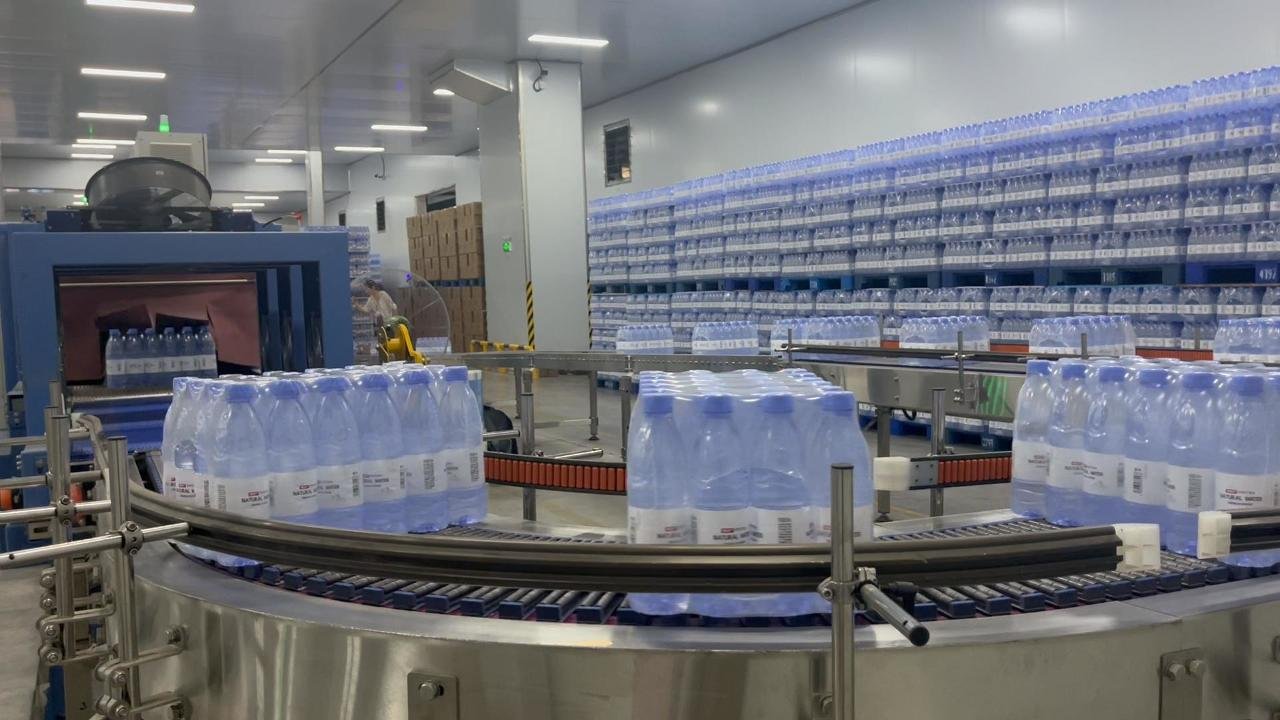
Across much of Central Asia, clean drinking water is no longer a convenience — it is a daily logistics problem. In the Fergana Valley and the fast-growing districts around Tashkent, municipal supply is intermittent, groundwater is frequently loaded with dissolved salts, and summer temperatures push consumer demand for safe bottled water to levels local producers simply cannot meet. For a regional entrepreneur, the opportunity is obvious. The obstacle is rarely the market; it is building a production line that can turn brackish, high-hardness feed water into internationally compliant bottled water — reliably, at scale, and with parts and know-how that survive being 4,000 kilometres from the nearest major equipment hub.
This is the story of a 5,000 BPH (500 ml equivalent) PET bottled water line that zoolinked mechanical designed, manufactured, installed and commissioned for a private beverage investor near Tashkent, Uzbekistan. Rather than walk through it as a generic equipment list, we want to start where the project actually started — with the water itself — because in this region, the raw water analysis dictates almost every downstream decision.
Why the Raw Water Came First
Before a single piece of stainless steel was quoted, our process team asked the client for a full laboratory analysis of the borehole feeding the site. What came back explained why two earlier attempts by other suppliers had produced water that tasted flat, scaled up the filling nozzles within weeks, and failed conductivity checks. The feed water was hard, saline, and carried a nitrate level that sits uncomfortably close to WHO guidance.
| Parameter | Raw Borehole Water | WHO / Target for Bottled Water |
|---|---|---|
| Total Dissolved Solids (TDS) | 1,850 mg/L | < 500 mg/L (target 30–80) |
| Total Hardness (as CaCO₃) | 640 mg/L | < 200 mg/L |
| Nitrate (NO₃) | 44 mg/L | < 50 mg/L |
| Chloride | 410 mg/L | < 250 mg/L |
| Turbidity | 3.8 NTU | < 1 NTU |
| Iron | 0.6 mg/L | < 0.3 mg/L |
The conclusion was straightforward: this project could not be solved with sand filtration and a simple carbon polish. It needed a reverse osmosis heart, sized with enough margin to hold output stable even as the borehole salinity drifts higher in dry months. Every other equipment choice — pump ratings, tank materials, dosing points — flowed from that single fact.
Project Snapshot
| Location | Tashkent Region, Uzbekistan |
| Product | Still bottled drinking water, PET |
| Bottle Formats | 330 ml, 500 ml, 1.5 L (quick-change) |
| Rated Capacity | 5,000 BPH (based on 500 ml) |
| Feed Water | Borehole, TDS 1,850 mg/L |
| Core Process | Two-stage RO + remineralisation + ozone |
| Scope | Design, manufacture, installation, commissioning, operator training |
| Commissioning | ~30 days on site |
Client Requirements — Beyond “Just Bottle Water”
During our first working sessions, the client’s brief matured from “I want a water line” into a set of concrete, commercially-driven requirements. Capturing these accurately is the part of a turnkey project that outsiders underestimate; a misunderstanding here costs far more than a wrong valve.
- Stable output despite variable feed: the line had to hold 5,000 BPH even when borehole TDS climbs in late summer.
- Great taste, not just safe water: pure RO permeate tastes flat, so controlled remineralisation was mandatory for consumer acceptance.
- Format flexibility: retail 500 ml plus HORECA 1.5 L, with changeover measured in minutes, not shifts.
- Low skill dependency: the local labour pool had limited bottling experience, so the line needed forgiving automation and clear HMI guidance.
- Serviceability at distance: standardised, regionally-available components wherever possible, plus a strategic spare-parts kit.
The Turnkey Solution — Following One Drop of Water
The clearest way to understand this line is to follow a single drop of borehole water from intake to sealed bottle. Each stage exists to close part of the gap shown in the water analysis table above.
1. Pre-Treatment — Protecting the Membranes
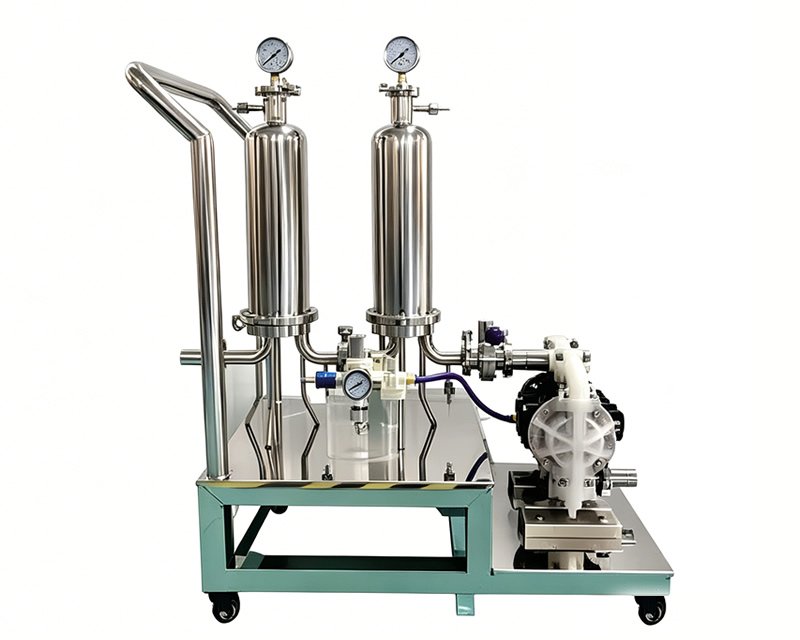
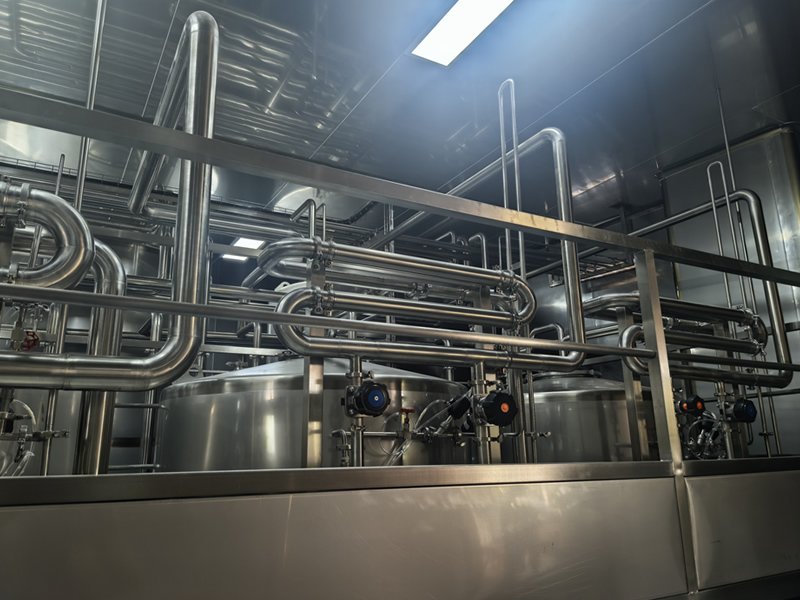
Raw water first passes through a multimedia (quartz sand) filter to strip turbidity and suspended solids, then an activated carbon filter to remove chlorine, organics and colour that would otherwise foul the RO membranes. A dosing station injects antiscalant ahead of the membranes, and a 5-micron security cartridge filter acts as the final guard. In a high-hardness feed like this, pre-treatment is not a formality — it is what determines whether the membranes last years or months.
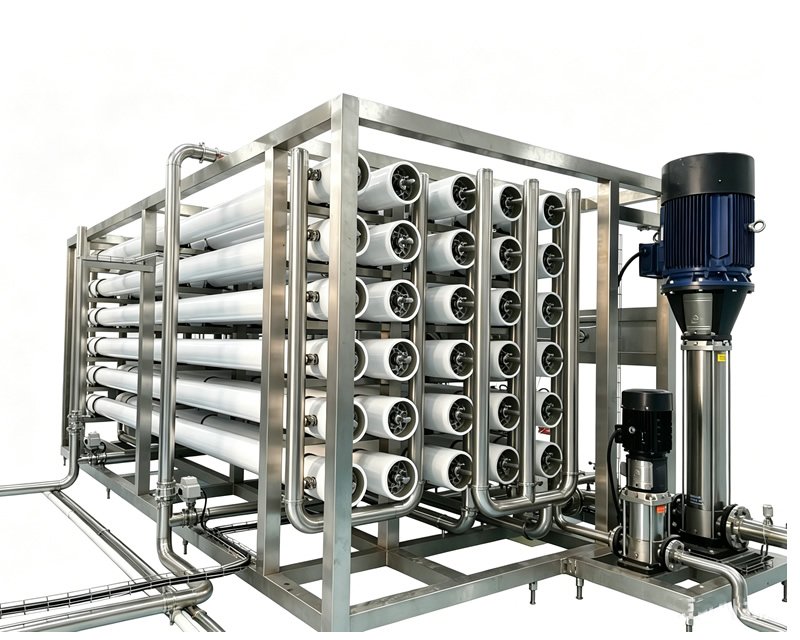
2. Two-Stage Reverse Osmosis — The Heart
A two-stage RO system reduces TDS from 1,850 mg/L to well under 50 mg/L. We deliberately oversized the first stage so that when summer salinity rises, the system throttles up rather than falling behind the filler. A high-pressure plunger pump drives the membranes; conductivity is monitored continuously and out-of-spec permeate is automatically diverted rather than allowed downstream.
3. Remineralisation — Turning Pure Water into Good Water
This is the stage that earlier suppliers skipped, and it is why their water tasted “empty”. A calcite/mineral dosing stage reintroduces a controlled balance of calcium and magnesium, lifting the permeate to a pleasant, mildly mineralised profile with stable pH. The result is water that consumers actually prefer in a blind taste — a genuine commercial differentiator in a crowded shelf.
4. Ozonation & Storage
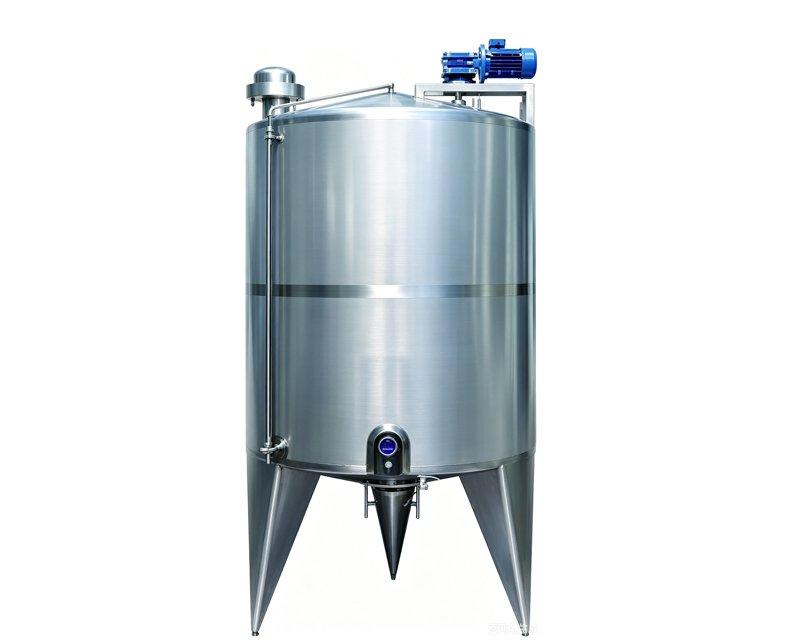
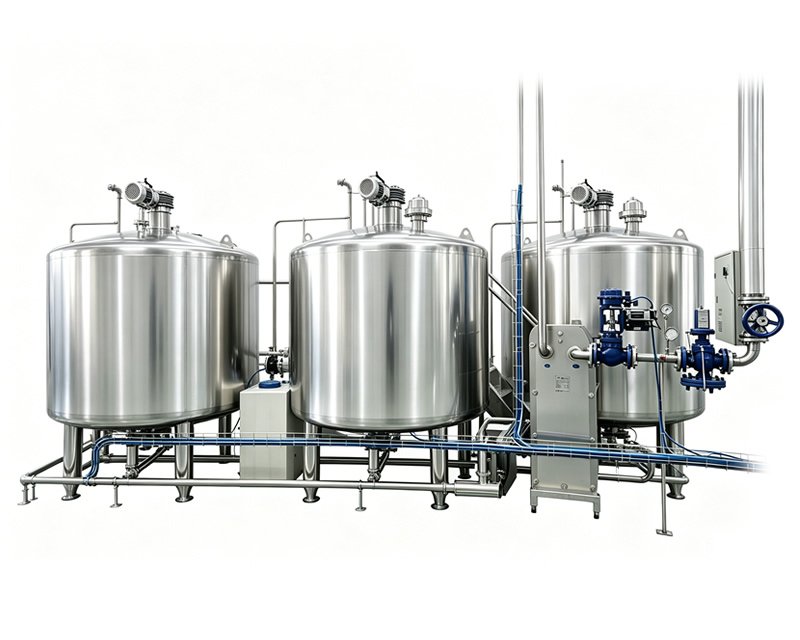
Treated water is buffered in food-grade SUS304 storage tanks and dosed with ozone for residual disinfection, guaranteeing microbiological safety through filling and giving the sealed product a protective shelf life without chemical aftertaste.
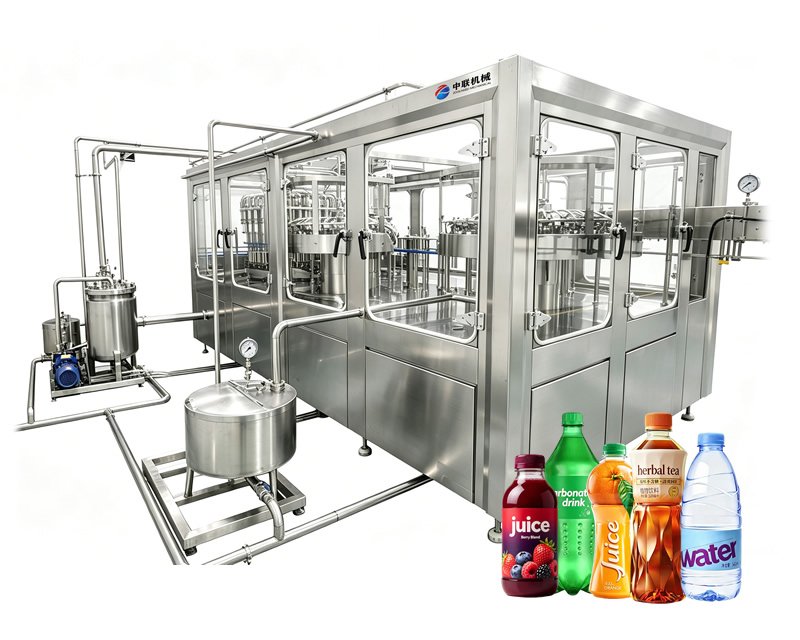
5. Bottle Blowing, Rinse-Fill-Cap & Packaging
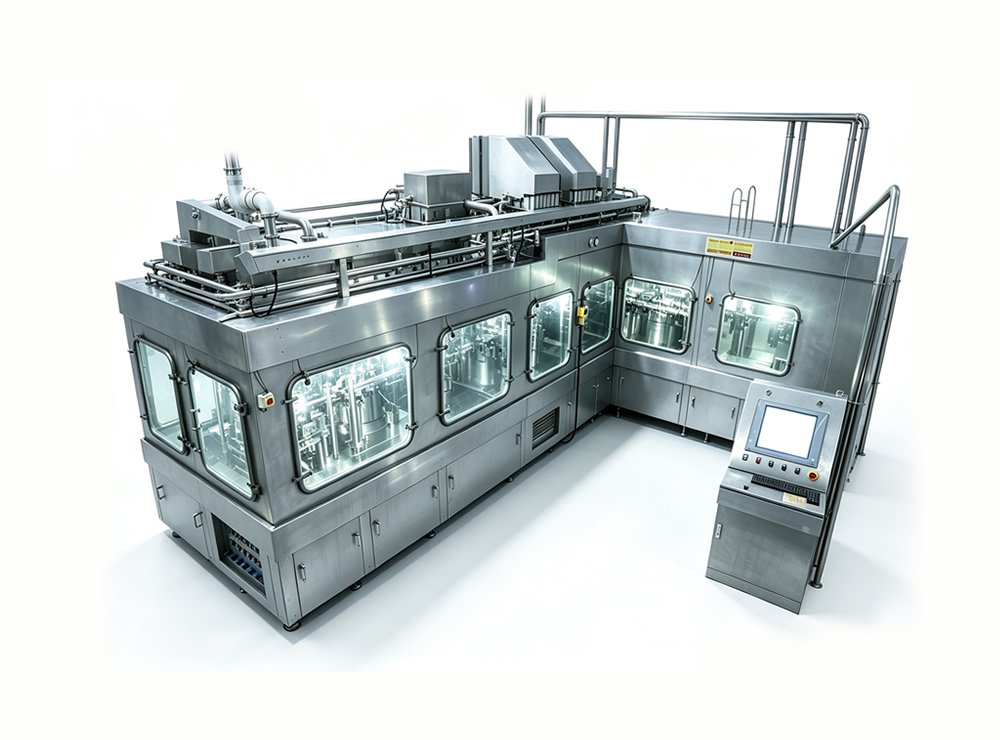
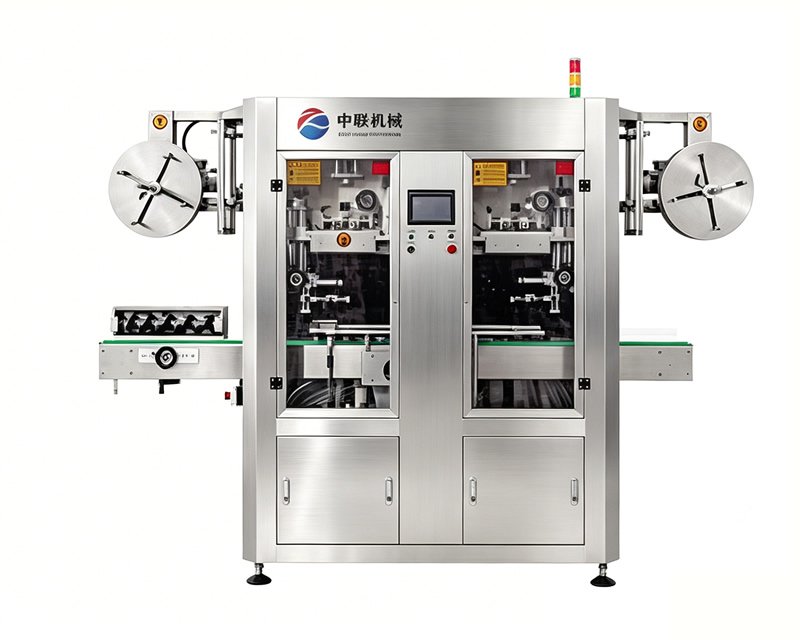
PET preforms are blown into bottles on an automatic blow-moulding machine, then conveyed to a 3-in-1 rinse–fill–cap monobloc — the single most important machine for hygiene, since the bottle is rinsed, filled and capped inside one enclosed zone with minimal human contact. Downstream, bottles pass automatic labelling, date coding, shrink-film wrapping and palletising. Quick-change format parts let the crew switch between 500 ml and 1.5 L in minutes.
Equipment Configuration
| Section | Key Equipment | Function |
|---|---|---|
| Pre-treatment | Multimedia + activated carbon filters, antiscalant dosing, 5µm security filter | Remove turbidity, chlorine, organics; protect RO |
| Desalination | Two-stage RO with high-pressure pump | TDS 1,850 → <50 mg/L |
| Conditioning | Mineral dosing / remineralisation unit | Restore taste & stable pH |
| Disinfection | Ozone generator + SUS304 storage tanks | Microbiological safety |
| Bottle supply | Automatic PET blow-moulding machine | Produce bottles from preforms |
| Filling | 3-in-1 rinse–fill–cap monobloc | Hygienic filling, 5,000 BPH |
| End of line | Labeller, date coder, shrink wrapper, palletiser | Finished, retail-ready packs |
Installation, Commissioning & Training
Equipment was pre-assembled and factory-tested before shipment, which shortened on-site work considerably. Over roughly 30 days, our engineers supervised mechanical installation, piping and electrical integration, then ran a staged commissioning: water treatment validated first (with lab confirmation of TDS, hardness and microbiological targets), followed by wet trials of the filling block, and finally a continuous run at rated speed.
Because the client flagged limited local bottling experience, operator training was treated as a deliverable, not an afterthought. The team was trained on daily start-up and shutdown, RO membrane care and antiscalant management, CIP cleaning routines, format changeover, and first-line fault diagnosis via the HMI. By handover, the client’s own staff were running the line unsupervised through a full shift.
Results & Return on Investment
- Compliant, great-tasting water: finished product consistently meets bottled-water quality targets, with a mineral profile consumers prefer.
- Stable 5,000 BPH output maintained through the summer salinity peak, thanks to the oversized RO stage.
- Fast format switching between 500 ml retail and 1.5 L HORECA packs, opening two channels from one line.
- Low operating dependency: a modest local crew runs the line after a single training cycle.
For a market where safe water is a daily concern and demand is structurally under-served, a line like this typically reaches attractive payback because it converts a low-cost local resource — borehole water — into a branded, shelf-stable consumer product with healthy margins. The investment is protected precisely because the design respects the raw water reality instead of ignoring it.
Conclusion
The lesson from this Tashkent project is one we see repeated across Central Asia: bottled water success is decided upstream, in the water treatment design, long before the first bottle is filled. By starting from a rigorous raw water analysis and building a two-stage RO line with proper remineralisation, zoolinked mechanical delivered a plant that produces safe, compliant, genuinely good-tasting water — and does so reliably in the hands of a local team.
Planning a Bottled Water Project in a Challenging Water Region?
Whether your feed is brackish borehole water, hard municipal supply or surface water, we design the treatment train around your actual water analysis. Explore our complete Drinking Water Production Line solutions, or send us your water report for a tailored proposal.