In Lagos, soft drinks sell faster than most producers can make them. Heat, a young population and a booming informal retail network mean demand for cola, lemon-lime and flavoured sparkling drinks never really slows down.
This is how zoolinked mechanical helped one Nigerian beverage start-up go from a rented warehouse to a running 8,000 BPH carbonated soft drink (CSD) line — told through the three problems they had to solve first.
Why West Africa Is a CSD Hotspot
- Hot climate → year-round demand for cold, fizzy drinks
- Young, growing population with rising disposable income
- Dense informal retail (kiosks, street vendors) that moves volume fast
- Local production beats imports on cost, freshness and lead time
The Client at a Glance
| Market | Lagos, Nigeria (West Africa) |
| Business stage | First production line, new brand |
| Product | Carbonated soft drinks (cola, orange, lemon-lime) |
| Bottle | PET, 500 ml & 1.25 L |
| Line speed | 8,000 BPH (500 ml) |
| Scope | Turnkey: design → build → install → train |
Problem 1 — “Our Water Ruins the Taste”
Municipal supply in the district was chlorinated, hard and unreliable. For CSD, that is fatal — off-flavours and scale show up instantly in a carbonated drink.
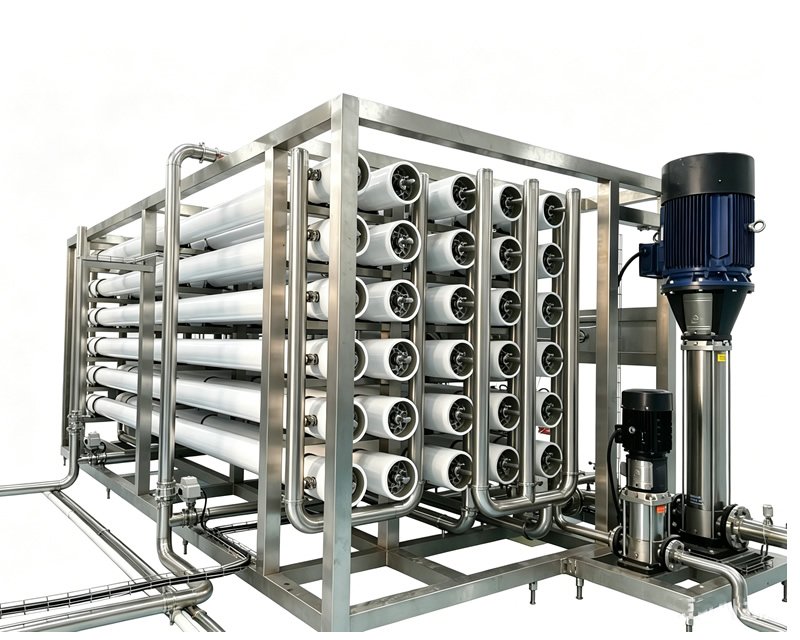
Our answer: a dedicated water treatment front-end sized for beverage-grade output.
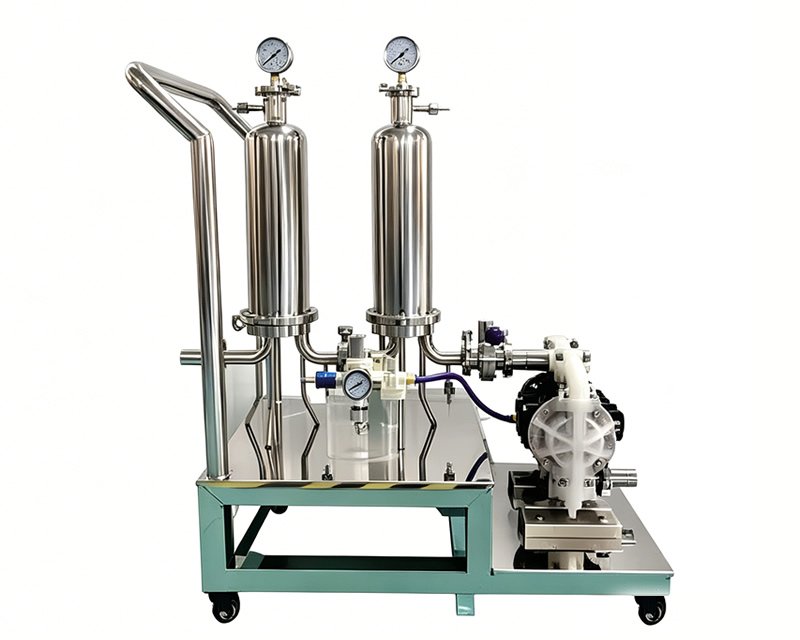
- Multimedia + activated carbon filtration → removes turbidity, chlorine, odour
- Reverse osmosis → stabilises TDS and hardness batch to batch
- Buffer + UV/ozone polish → consistent, neutral base water
Raw Water vs. Beverage Target
| Parameter | Municipal Feed | CSD Base Water Target |
|---|---|---|
| Chlorine | Present (dosed) | None |
| Total Hardness | High, variable | Low & stable |
| TDS | Fluctuates | Consistent batch-to-batch |
| Odour / taste | Noticeable | Neutral |
Problem 2 — “Every Batch Tastes Different”
Before, syrup was mixed by hand. Sugar levels drifted, carbonation was guesswork, and no two batches matched. A brand cannot grow on inconsistency.
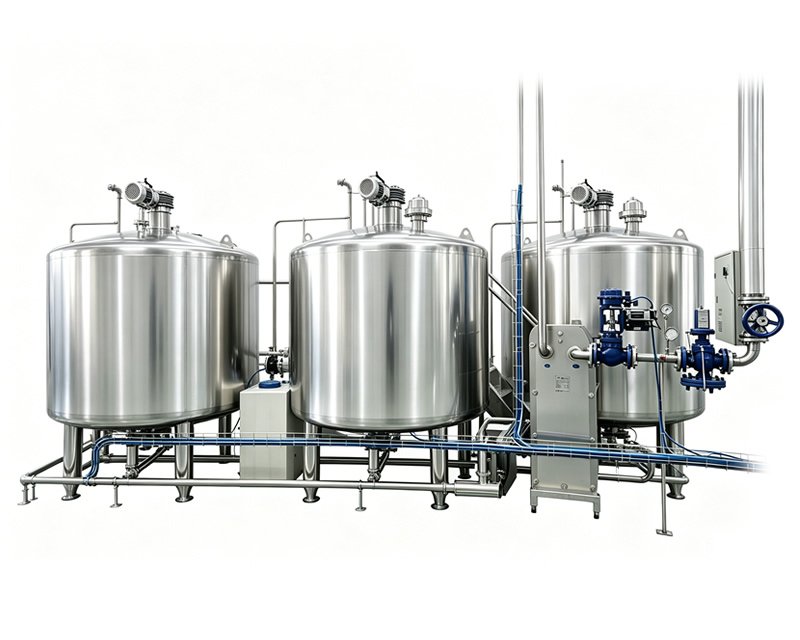
Our answer: an automatic syrup room + carbonation control.
| Stage | Equipment | What it fixes |
|---|---|---|
| Sugar dissolving | Hot mix sugar dissolver | Fully dissolved, sterile syrup |
| Blending | Automatic proportioning mixer | Exact water-to-syrup ratio, every time |
| Carbonation | Inline CO₂ carbonator | Consistent, controllable fizz |
Typical Carbonation Targets
| Drink type | Carbonation (vol CO₂) | Fill temp |
|---|---|---|
| Cola | 3.5 – 3.8 | 4 – 8°C |
| Lemon-lime | 3.8 – 4.2 | 4 – 8°C |
| Orange / fruit | 2.5 – 3.0 | 4 – 8°C |
Keeping the product cold and precisely gassed is what separates a professional CSD from a flat, foamy one.
Problem 3 — “We Can’t Fill Fast Enough”
Filling carbonated drinks is harder than still water — the liquid must stay cold and pressurised or it foams and loses gas. Manual filling simply could not keep up with demand.
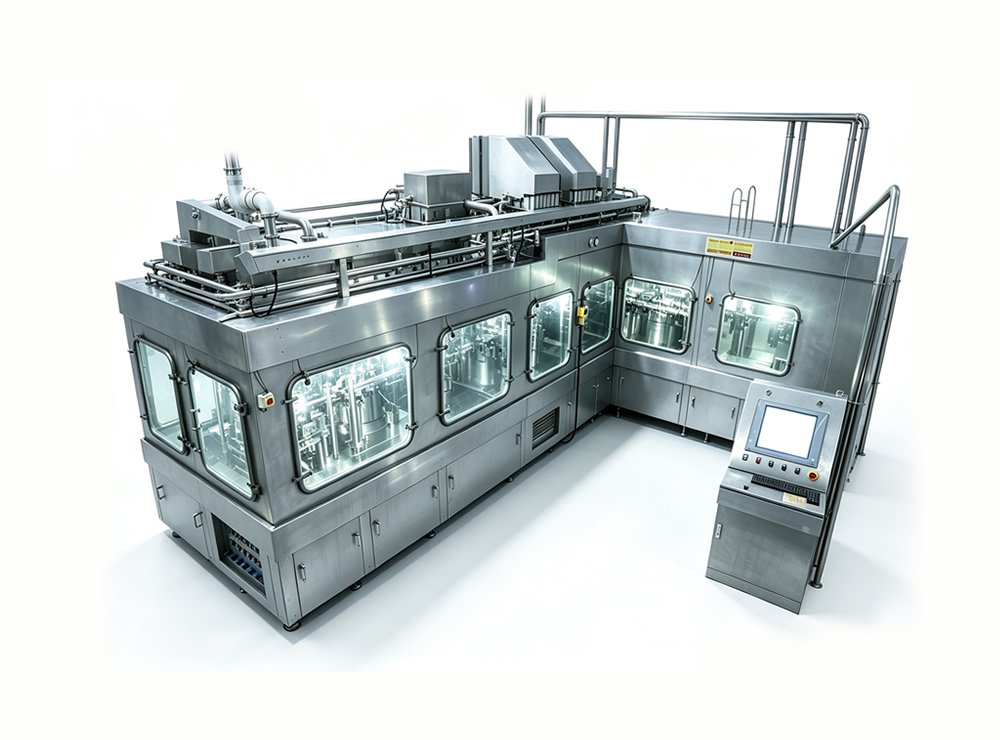
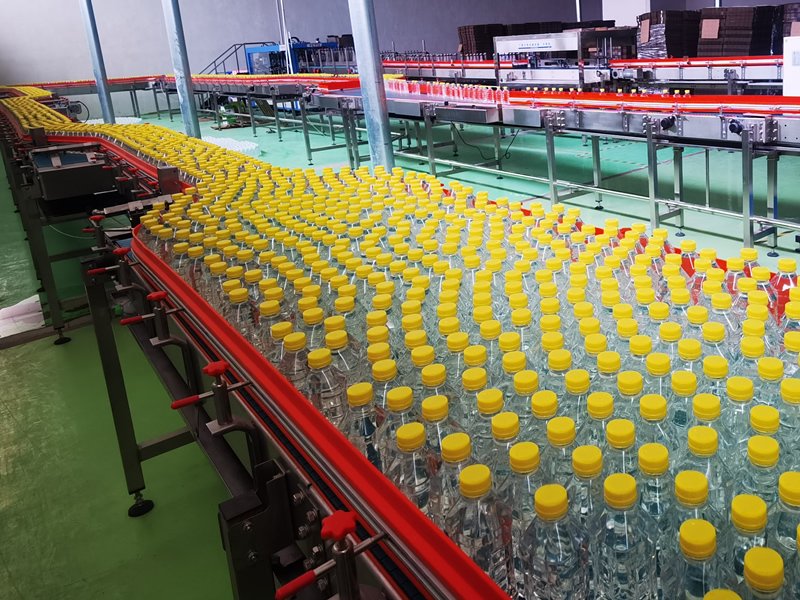
Our answer: an isobaric (counter-pressure) 3-in-1 filling monobloc.
- Rinse – fill – cap in one enclosed, hygienic block
- Isobaric filling preserves CO₂ and minimises foaming
- 8,000 BPH sustained, with quick-change for 500 ml / 1.25 L
The Complete Line — Process Flow
- Water treatment (filtration + RO + polish)
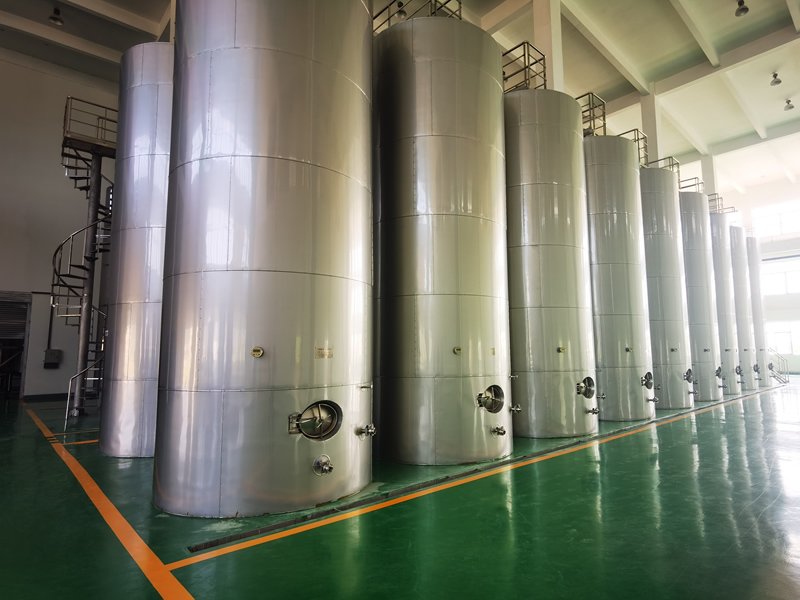
- Sugar dissolving & syrup preparation
- Automatic blending (water + syrup)
- CO₂ carbonation
- Isobaric 3-in-1 rinse–fill–cap
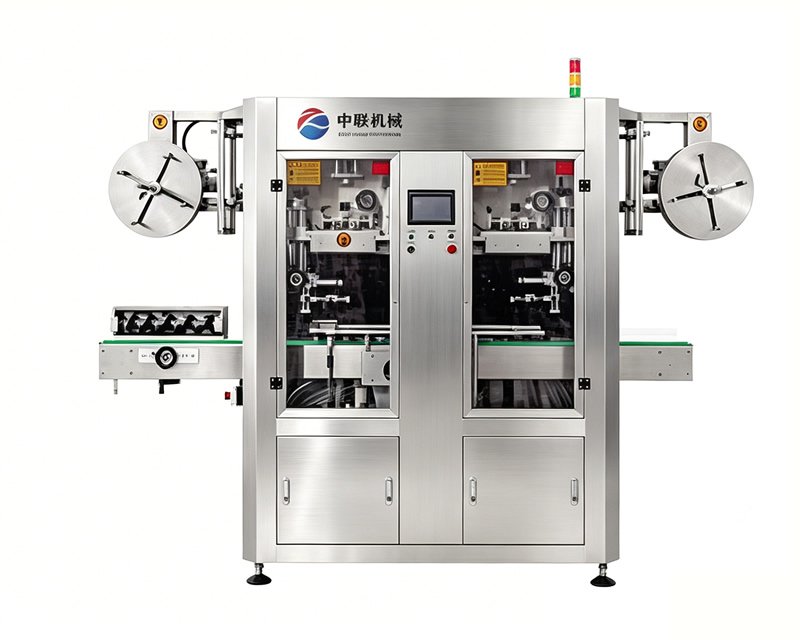
- Labelling & date coding
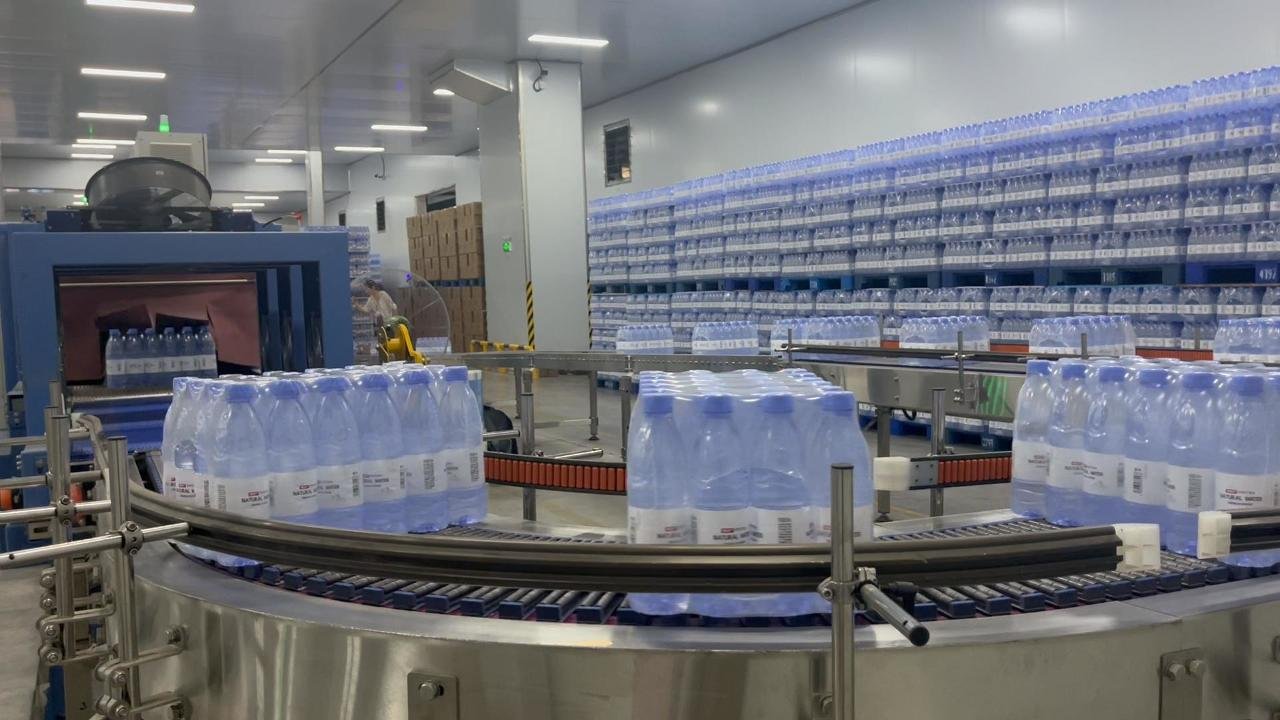
- Shrink-wrap packing & palletising
Equipment Configuration
| Section | Key Machine | Role |
|---|---|---|
| Water treatment | Multimedia + carbon filter, RO system | Beverage-grade base water |
| Syrup room | Sugar dissolver + proportioning mixer | Consistent syrup & blend |
| Carbonation | Inline CO₂ carbonator | Controlled fizz |
| Filling | Isobaric 3-in-1 monobloc | Hygienic 8,000 BPH fill |
| Labelling | Auto labeller + coder | Branding & traceability |
| End of line | Shrink wrapper + palletiser | Retail-ready packs |
Project Timeline
| Phase | Duration | Milestone |
|---|---|---|
| Design & approval | Weeks 1–3 | Layout + water plan locked |
| Manufacturing & FAT | Weeks 4–9 | Factory-tested before shipping |
| Installation | Weeks 10–12 | Mechanical + electrical set-up |
| Commissioning | Weeks 13–14 | Wet trials + full-speed run |
| Training & handover | Week 14 | Local crew runs line solo |
Operator Training — What the Crew Learned
- Daily start-up, shutdown & sanitation
- Syrup mixing & Brix (sugar) checks
- Carbonation adjustment & CO₂ safety
- CIP cleaning between flavours
- Format changeover & basic fault-finding
Results
| Before | After |
|---|---|
| Hand-mixed, inconsistent batches | Automated, repeatable quality |
| Off-flavours from raw water | Clean, neutral beverage base |
| Manual filling bottleneck | 8,000 BPH sustained output |
| Single format | 500 ml + 1.25 L on one line |
Maintenance the Crew Handles In-House
- Daily: CIP rinse, check CO₂ pressure, inspect caps
- Weekly: sanitise syrup tanks, verify Brix meter
- Monthly: RO membrane check, replace filter cartridges
- Quarterly: full mechanical inspection of filler & capper
Frequently Asked Questions
Can one line handle multiple flavours?
Yes. CIP cleaning between flavours lets you run cola, orange and lemon-lime on the same line without cross-taste.
Can we start smaller and scale up?
Yes. The line is modular — capacity and formats can be expanded as your brand grows.
Do you supply spare parts locally?
Standardised, regionally-available components are specified wherever possible, plus a strategic spare-parts kit at handover.
Why It Pays Off
- Low input cost: local water + sugar + CO₂ → high-margin branded drink
- Two formats, two channels: retail 500 ml + family 1.25 L
- Consistency builds the brand: every bottle tastes the same
- Room to grow: line ready to add new flavours
Launching a Carbonated Drink Brand?
From water treatment to isobaric filling, we build complete CSD lines around your recipe and capacity. Explore our Carbonated Beverage Production Line solutions, or send us your product brief for a tailored proposal.