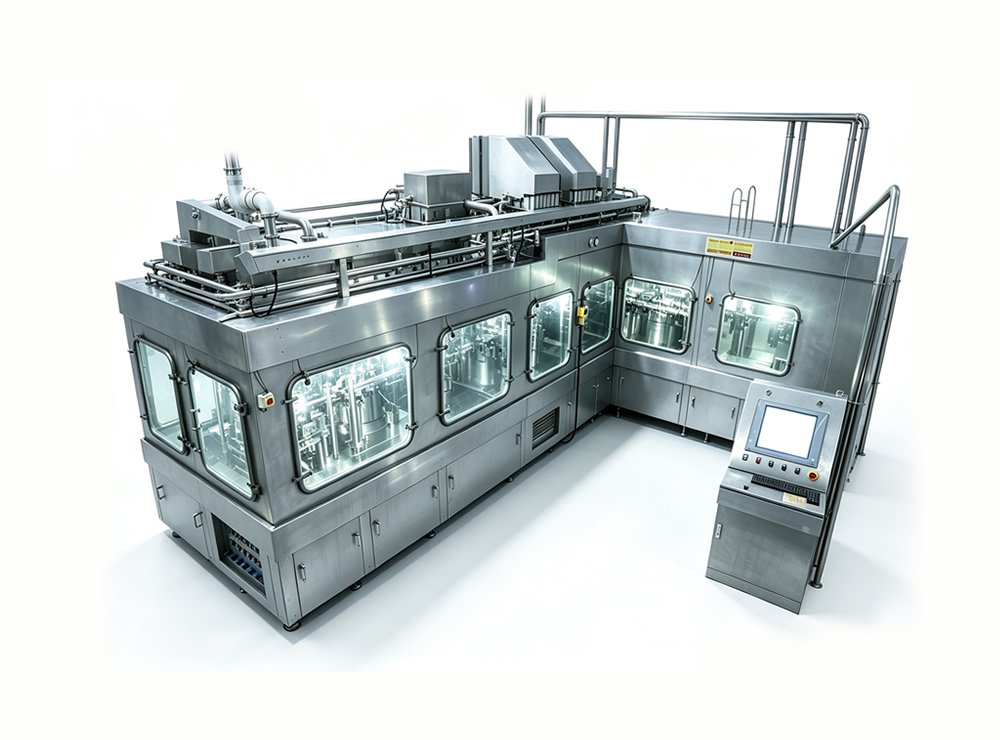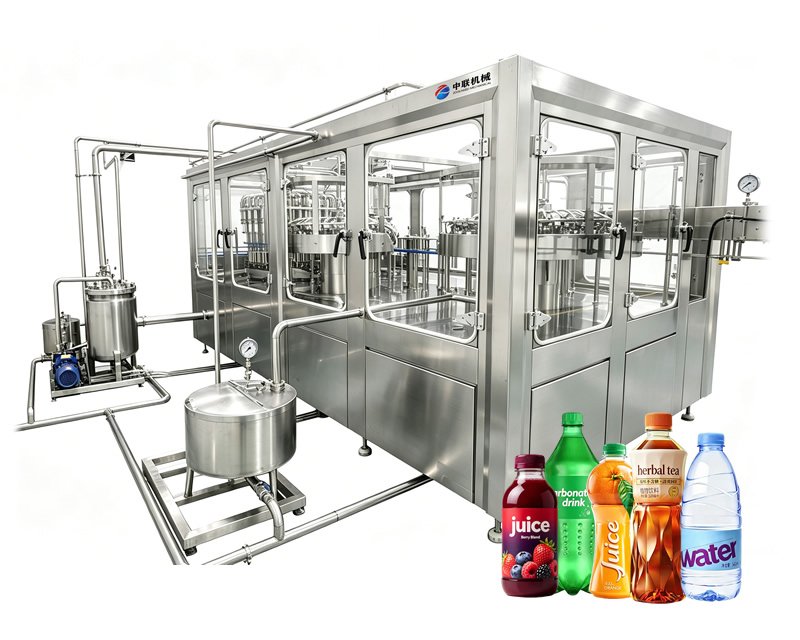
Choosing the wrong filling technology is one of the most expensive mistakes a new beverage plant can make. The filling monobloc sits at the heart of any production line, and it must match your product’s viscosity, carbonation, temperature and shelf-life strategy. This guide explains the three most common filling methods and how to decide between them.
1. Gravity (Atmospheric) Filling
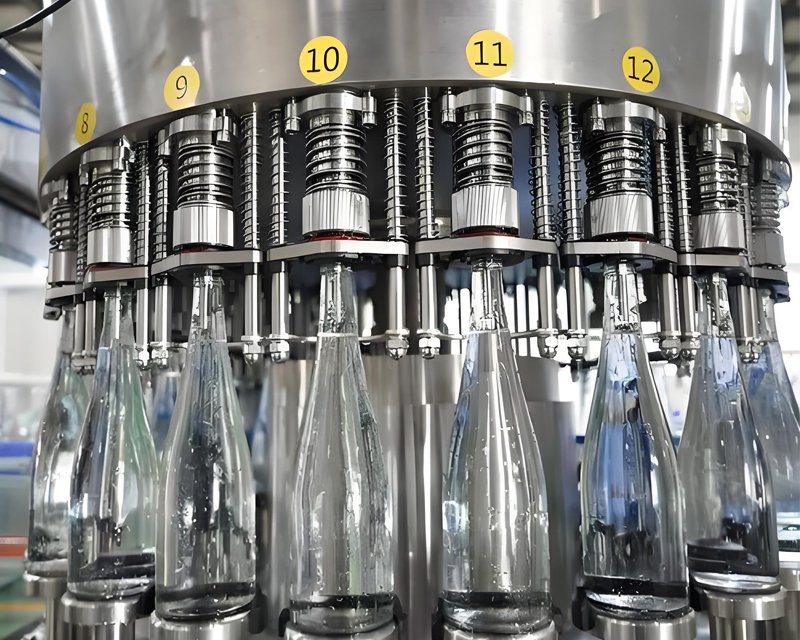
Gravity filling relies on the weight of the liquid to flow into the bottle at atmospheric pressure. It is simple, low-cost and ideal for thin, still, non-carbonated products.
- Best for: still water, non-carbonated flavoured water, thin still drinks
- Advantages: simple mechanics, easy cleaning, low maintenance cost
- Limitations: not suitable for carbonated or high-viscosity products
2. Isobaric (Pressure) Filling
Isobaric filling equalises pressure between the bottle and the filling tank before liquid transfer, preventing CO2 loss and foaming. It is the standard choice for carbonated beverages.
- Best for: carbonated soft drinks, sparkling water, beer, energy drinks
- Advantages: preserves carbonation, minimises foaming, stable fill levels under pressure
- Limitations: higher equipment cost, requires chilled product for best CO2 retention
3. Hot-Fill Filling
Hot filling introduces product at 85-92°C so that the heat sterilises the bottle and cap, enabling ambient shelf stability without heavy chemical preservation. It is the go-to method for juices and teas.
- Best for: fruit juices, RTD teas, isotonic drinks, high-pulp beverages
- Advantages: shelf-stable at ambient temperature, preservative-light, natural positioning
- Limitations: requires heat-resistant PET bottles and a cooling tunnel; higher energy use
How to Choose
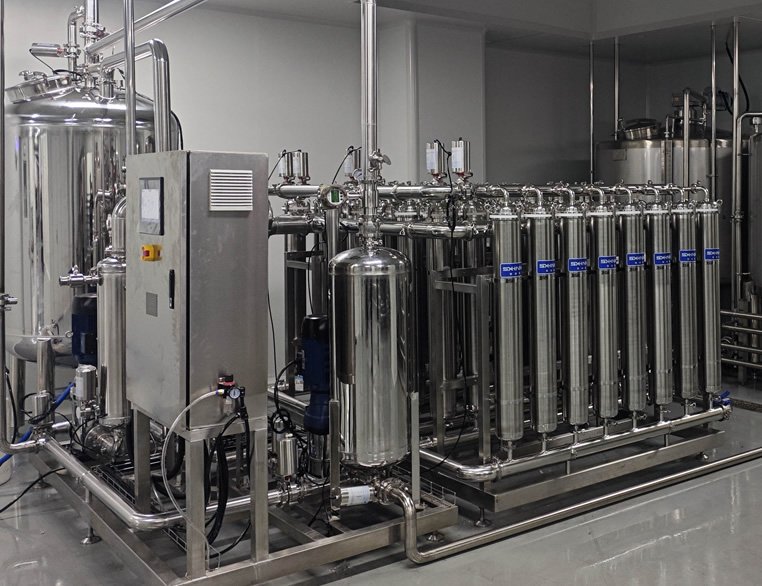
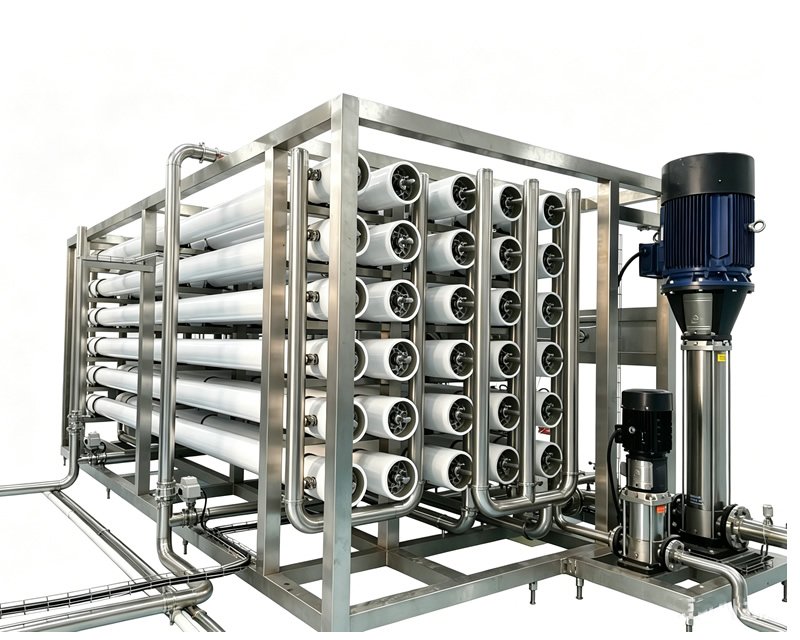
Start from the product, not the machine. Ask: Is it carbonated? What is its viscosity and pulp content? What shelf life and distribution temperature do you need? A still water plant needs gravity filling; a soda plant needs isobaric; a juice or tea plant needs hot-fill or aseptic cold-fill. Many growing brands eventually run more than one line format, which is why a modular treatment backbone shared across formats is a smart investment.
Talk to an Engineer, Not a Salesperson
The right filling technology depends on dozens of variables specific to your product and market. Our engineering team designs turnkey lines around your recipe, target output and local utilities — from water treatment to final packaging.
Not sure which filling technology fits your product? Explore our Complete Beverage Production Line Solutions.
Related reading: explore our turnkey project cases across water, soda, juice, tea and plant protein beverages.